![ECOG-ACRIN logo[19516]275×75](https://blog-ecog-acrin.org/wp-content/uploads/2021/03/ECOG-ACRIN-logo19516275x75.png)

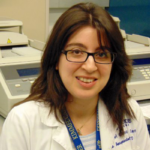
ECOG-ACRIN Names Johns Hopkins University’s and the Sidney Kimmel Comprehensive Cancer Center’s Valsamo Anagnostou as its Young Investigator of the Year
May 28, 2026
News in Brief, June 2026
June 29, 2026From the Co-Chairs, May 2026


By Peter J. O’Dwyer, MD (left)
and Mitchell D. Schnall, MD, PhD
Thanks to all who attended our spring meeting in Baltimore and helped to make it a great success. The city is a wonderful location, the venue well-equipped to handle sessions of our size, and the active ECOG-ACRIN participation of Johns Hopkins and the University of Maryland Cancer Centers, as well as large community institutions such as Greater Baltimore Medical Center, celebrated. Please let us know how you liked the revised session schedule. The meeting formally began with the Comis Translational Science Symposium, this time focused on metabolism and inflammation as cancer risk factors and targets for its treatment. The purpose of these symposia is to stimulate ideas for clinical research in our Group, and numerous potential interventions were evident in the presentations and subsequent panel discussion.
The General Session also featured significant scientific content, and a nod to Baltimore. Dr. Elizabeth Jaffee (Johns Hopkins) discussed the status of her pancreatic cancer vaccines and detailed a structure assembled by National Cancer Institute Director Dr. Anthony Letai for the accelerated development of cancer vaccines. A network utilizing a public-private partnership model has been developed with some seven institutions (all currently cancer centers), and varied approaches will be explored. Early data in this field are highly promising, and complex technologically. We are highly supportive of this approach and will hope for Group engagement at a later stage. Dr. Yana Najjar (University of Pittsburgh) has assumed leadership of the Immunotherapeutics Subcommittee and provided a vision of her research goals in this area, while Dr. Taofeek Owonikoko (University of Maryland) summarized a trial of ivonescimab, a bispecific antibody with promise in lung cancer (PrECOG PrE0510).
Two awards at the General Session generated great enthusiasm. Dr. Valsamo (Elsa) Anagnostou (Johns Hopkins) was named as the 2026 Young Investigator Awardee. Elsa leads the Lung Biology Subcommittee and the Data Science Committee, sharing her considerable expertise in both lung cancer translational research and data analytics. Dr. Jordan Berlin (Vanderbilt University) was named as the recipient of the Remarkable Mentor in Oncology Award. As chair of the Gastrointestinal Cancer Committee, and in many capacities before, Jordan brings good humor and honest criticism that helps early-career investigators develop their science, and with it their careers. Both of these investigators represent the best of our activities and deserve our acclaim.
Those at the General Session also heard Paul Goldberg, editor and publisher of The Cancer Letter, present a perspective on engagement with scientific leaders at a time of decreased support for science in general. He highlighted the distrust in science present in a segment of the current political environment, counterbalanced by a recognition of the role of science in American culture and population support for its funding. Regarding his team’s approach during this tumultuous time, Paul said: “We were not going to report stories that we didn’t believe to be true and didn’t know to be true … We were going to rely on our journalistic ethics, avoiding opinion to the extent possible, and providing firm, reliable information, realizing that at a time like this, information equals leadership. If we kept our bearings straight our readers would be able to as well.”
Coincidentally, this same issue was recently addressed by the editor of Science, H. Holden Thorp, in the May 7 edition, as a response to efforts to diminish research in the public discourse. He recognized that in specific circumstances, only a small fraction of researchers can be emboldened to take public stances against inimical policies. However, everyone can contribute to the dialogue in their own way, supporting the rational debunking of disinformation wherever it may arise. “No matter how one chooses to act, it’s never been more important to muster collective, sustained action to protect science.” One might contend that those of us engaged in cancer research have arguments more convincing than most.
Read the May 2026 issue here.
