![ECOG-ACRIN logo[19516]275×75](https://blog-ecog-acrin.org/wp-content/uploads/2021/03/ECOG-ACRIN-logo19516275x75.png)


Trial Results: ECOG-ACRIN Research Round-Up
April 24, 2026
Now Enrolling: EA1242/RxFINE-Low for Patients With High Anatomic Risk, Low Genomic Risk ER+/HER2- Breast Cancer
May 20, 2026Trial Spotlight: Dan Zandberg Provides an Update on the EA3191 Study for Patients With Head and Neck Cancer

EA3191 - A Phase II Randomized Trial of Adjuvant Therapy with Pembrolizumab after Resection of Recurrent/Second Primary Head and Neck Squamous Cell Carcinoma with High Risk Features
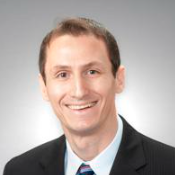 By Dan Zandberg, MD
Researchers continue to explore strategies to improve outcomes for patients who undergo resection for recurrent or second primary head and neck squamous cell carcinoma (HNSCC). Current standard-of-care options include observation—which carries a high risk of recurrence—and adjuvant reirradiation with concurrent chemotherapy. While the latter approach has been shown to improve recurrence-free and disease-free survival (DFS), it has not demonstrated a benefit in overall survival (OS).
The absence of an OS benefit creates clinical equipoise for evaluating alternative treatment strategies, including approaches that avoid additional radiation therapy. Adjuvant reirradiation with concurrent chemotherapy is also associated with substantial toxicity, and high-grade late effects can persist for years.
EA3191 is a randomized phase 2 trial examining adjuvant pembrolizumab versus standard-of-care reirradiation with concurrent chemotherapy. The primary endpoint is OS; secondary endpoints include DFS, locoregional control, rate of distant metastasis, quality of life, toxicity, and the predictive value of PD-L1. The US Food and Drug Administration (FDA) has approved pembrolizumab for treating resectable locally advanced HNSCC since 2019, and for treating metastatic or unresectable recurrent HNSCC since 2025. Both approvals are contingent on tumors being PD-L positive.
Participants are randomized 1:1 to one of two arms: radiation therapy (intensity-modulated radiation therapy [IMRT] or proton therapy) with weekly platinum chemotherapy (carboplatin is allowed if patients meet certain criteria), or 12 months of intravenous pembrolizumab given every 6 weeks. To be eligible, patients must have locoregionally recurrent or second primary HNSCC (oral cavity, oropharynx, larynx, hypopharynx) with high-risk features (positive margins and/or extranodal extension) in a previously radiated field at least 6 months prior to enrollment; have no evidence of distant disease, and a PD-L1 combined positive score ≥ 1. Patients must be randomized within 8 weeks of surgical resection, with treatment starting by 10 weeks from surgery.
To facilitate enrollment in the trial, we have found that multidisciplinary tumor boards and oncology team meetings help to identify eligible participants. This approach also ensures that patients get consistent messaging from their surgery and radiation/medical oncology teams.
The trial recently reached an enrollment milestone and is now halfway toward its target accrual of 188 patients. We encourage sites that have not already opened EA3191 to do so.
Given the great need for improvement in outcomes for this patient population, EA3191 has the potential to establish a new standard of care and reduce treatment-related toxicity. By restricting enrollment to patients with PD‑L1–expressing tumors, the trial aims to build on the demonstrated success of immunotherapy in the recurrent or metastatic setting and focus treatment on those most likely to derive benefit.
Notably, the trial has a rare tumor designation, as it meets the National Cancer Institute (NCI) criteria for exclusion from accrual monitoring on the basis of uncommon clinical presentation of more common tumors. This designation recognizes that accrual of patients to these trials often takes a longer period of time and may need a longer enrollment period to meet accrual targets.
Learn more about the EA3191 trial at ecog-acrin.org.
Dr. Zandberg (University of Pittsburgh/UPMC Hillman Cancer Center) is the study chair for this trial. The study co-chairs are Zain Husain, MD (Sunnybrook Health Science Center-Odette Cancer Centre), Mihir Patel, MD (University of North Carolina-Chapel Hill/UNC Lineberger Comprehensive Cancer Center), and Richard Bakst, MD (Mount Sinai Health System/The Tisch Cancer Institute). The community co-chair is Mei Tang, MD (Greater Baltimore Medical Center).
The NCTN group study champion is Jennifer Choe, MD, PhD (Vanderbilt-Ingram Cancer Center) for NRG Oncology.
